
Take the Superfood-Group Challenge! Vegan Edition
By Dr. Madeline
Part 2: For Vegans
(Part 1: For Everybody is here)
Superfoods are whole foods with specific properties that are unique and beneficial to the human body. Research continues to show that Superfoods improve health, boost the immune system, and may decrease negative aspects of most chronic diseases. Today we focus on Superfoods for our vegan friends.
Eating vegan means avoiding meat, dairy, eggs, and honey. According to the Vegan Society, vegans avoid all animal foods, animal-derived materials, and any products tested on animals. Vegans also refrain from supporting any group that utilizes animals for entertainment.
As you shop, try to incorporate Superfoods and Superfood Groups into your diet. Keep in mind the goal: to get a full spectrum of nutrients, vitamins, and minerals for health! Before we get to the list, keep in mind the following about macronutrients: protein, fat, and carbohydrates.
Human Anatomy Structure is Composed of Protein and Fat
The bulk of your solid-state anatomy is made of protein and fat. Where do protein and fat come from? Your food, of course! The protein and fat you eat build your anatomy. It follows that with healthy building materials, you allow for optimal physiological functioning. This means all of your moving parts work smoothly so you feel your best.
When choosing a protein, be sure it is a healthful source and as minimally processed as possible. Many of the protein sources made specifically for vegans are excellent, and the HWFC provides many choices. Be aware that there are some protein alternatives that are not wholesome. One ingredient that comes to mind is soy protein isolate. This is a highly processed additive, often made from the harvesting of GMO crops, and has been shown to cause bloating, nausea, and cramps. Studies show that it also inhibits nutrient absorption from the gut. Be sure to always read your ingredients!
When it comes to fat, extra-virgin cold-pressed olive oil comes out on top as one of the richest sources for our body. Other oils on the “yes” list include avocado, peanut, and sesame oils. Most saturated oils like coconut and palm (sustainably sourced) are also fine as they are more resistant to the dangers of processing. Seed oils (also referred to as processed “polyunsaturated fatty acids” (PUFAs) are highly processed oils which may be good to avoid. These include: canola, sunflower, cotton, grapeseed, safflower, soybean, corn, or any vegetable oil.
Mindful Carbohydrates
Less than 1% of your body is made of carbohydrates. There is no such thing as an essential carbohydrate. Your liver can make the glucose you need from protein and fat. As you may notice from the Superfood Group list “for all” (found in Superfoods Part 1) and specifically for vegans, there are many carbohydrates listed that are in the form of vegetables and fruits, which provide wonderful essential vitamins, minerals, nourish the microbiome, boost immunity, and provide fiber. Ultra-processed carbohydrates from refined white flour like breads, pastas, cookies, cakes, etc., while an essential part of human heritage and family culture, are not essential to our overall health.
In short, reducing consumption of processed foods, especially refined sugar, grains, and starches, can increase our health. Ultra-Processed carbohydrates can cause inflammation, and inflammation can lead to chronic metabolic diseases such as heart disease, lipid problems, polycystic ovarian syndrome, diabetes, hypertension, dementia, cancer, and non-alcoholic fatty liver disease. Choosing a good variety of foods close to their natural state can reduce risk of chronic illness.
Below are some specific Superfoods as well as Superfood Groups (to give options within a category of healthful foods) that are excellent for vegans. You can start by considering switching out one processed food you eat regularly for a food from a Superfood Group. Use the Shopping Cart Checklist to assess your cart to help you add Superfoods from the Superfood Groups each time you shop.
Superfoods for Vegans
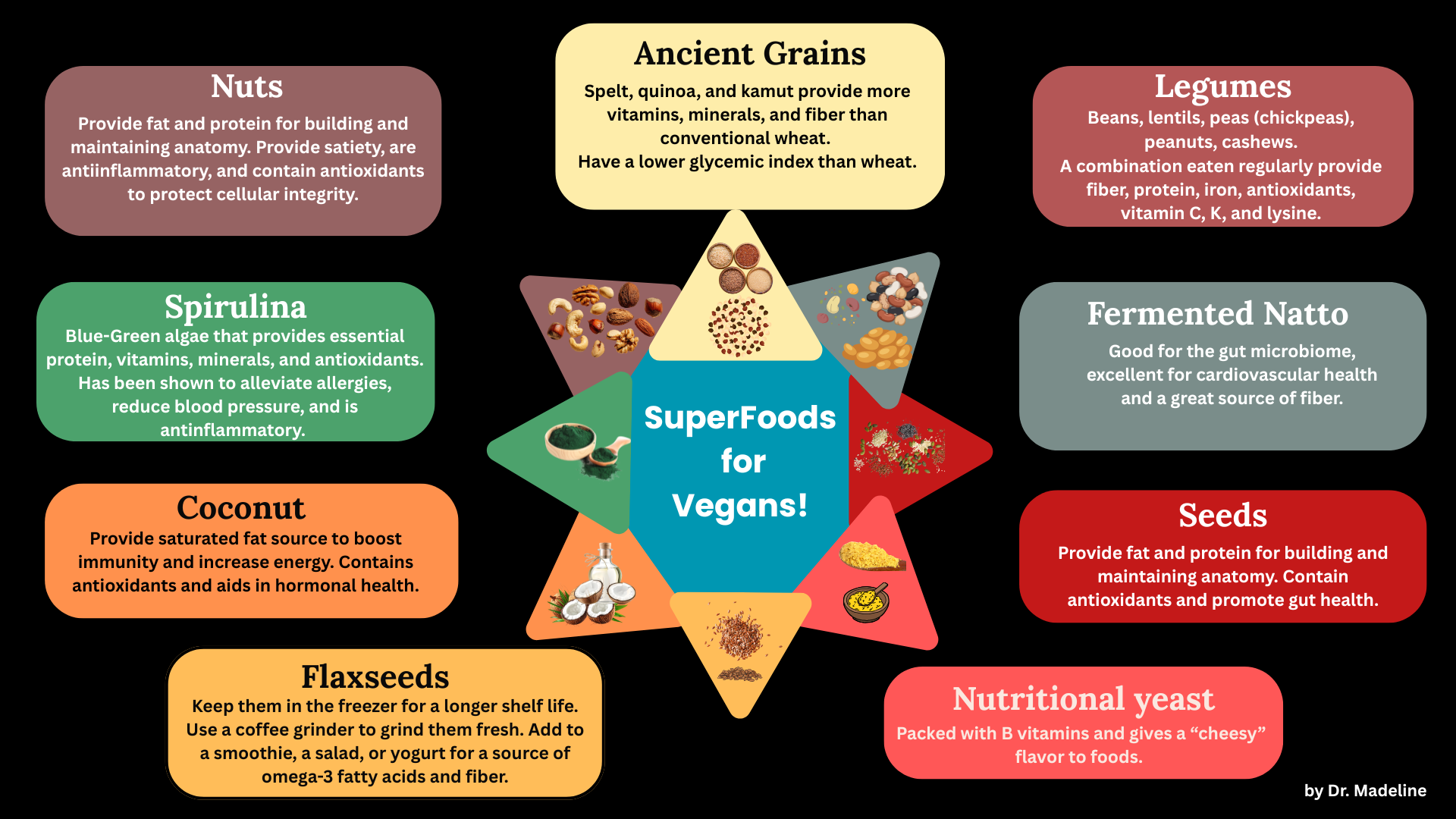
Fermented Natto: Replenishes the gut microbiome, excellent for cardiovascular health, and a great source of fiber. Mashed natto incorporated into avocado toast with a dab of soy sauce yields a scrumptious umami flavor.
Nuts and Seeds: Provide fat and protein to build and maintain anatomy. A wonderful snack or addition to your favorite salad.
Coconut Oil and Cream: Provide saturated fat for hormone health and contain free-radical-fighting antioxidants. Add coconut cream to a smoothie for a satiating smoothie.
Nutritional Yeast: Packed with B vitamins for cellular health, especially for the organelle that makes energy: the mitochondria. B-vitamins stabilize DNA, help repair DNA damage, and are essential for nervous system communication. Sprinkle nutritional yeast on popcorn or add to rice or pasta to give a “cheesy” flavor.
Spirulina: This blue-green algae is power-packed with nutrients and even has some protein and fat! Add to smoothies for a beautiful array of vitamins, minerals, and antioxidants that can decrease inflammation, boost the immune system, and regulate cholesterol levels.
Legumes: There are so many varieties: beans (black, adzuki), lentils, peas (chickpeas), peanuts, cashews. A combination of these foods eaten regularly will give you fiber, protein, iron, antioxidants, vitamin C, K, and lysine. Combine with rice to give your body all 9 essential amino acids, the building blocks of protein.
Ancient Grains: Utilize ancient grains like spelt, quinoa, and kamut to provide you more vitamins, minerals, and fiber than conventional wheat. Ancient grains have a lower glycemic index than carbohydrate sources that are more heavily processed. Cook the grains to enjoy with your favorite vegetables or check out the array of flours in the bulk section and bake bread with these nutritious carbohydrates.
Flaxseeds: Keep in the freezer for a longer shelf life. Use a coffee grinder to grind them fresh. Add to a smoothie, a salad, or yogurt for a powerful source of omega-3 fatty acids and fiber for brain and gut health.

Dr. Madeline has a Ph.D. in molecular, cellular, and developmental biology. She works at a local college where she teaches in the biology department. Check out her writing in The Coop Scoop or the HWFC Blog. Have a question or a suggestion for a future topic? MadHealthDoc@gmail.com She is not on social media so you can’t find her, follow her or subscribe to her channel. Instead, she hopes that you take a deep breath and let it out slowly. Then, smile and go outside.
View all the Coop Scoop Blog posts here.