
Creating a Healthy Habitat at Your Doorstep
By Ruth Ann Smalley
"It may not seem like your green space can be a place to enact change, but every green space is now the front line against climate change and habitat degradation" (Summers and Brittenham, Designing Gardens with Flora of the American East, 193)
Prioritizing in-season, locally-grown food and favoring local producers and businesses when purchasing other items are familiar practices for Honest Weight shoppers. We may also have been working for years to reduce our turf lawns, eschew dangerous lawn treatments, and even avoid buying plants treated with neonicotinoids.These choices are often part of our individual efforts to “be the change” we want to see in the world.
In recent years, some of us have been exploring the notion of taking “healthy and local” even further, into the realm of gardening with native plants. We have lovely models for this in the flowerbeds right outside Honest Weight. Restoring these plants to our habitat is more urgent than ever.
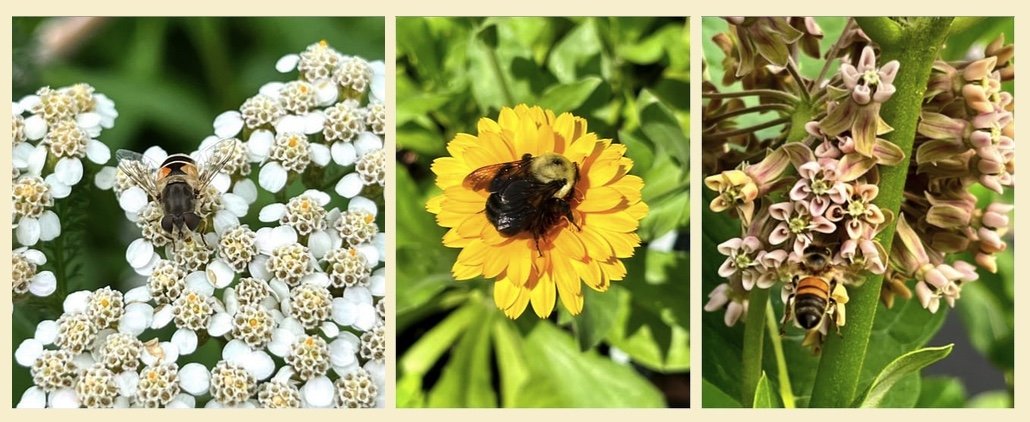
By now, many of us have heard about the issues created by introduced species such as Japanese knotweed and garlic mustard, which cause damage and crowd out natives. A growing body of research into these dynamics is helping people pay much more attention to the importance of native plants. But it may also cause non-specialists to feel overwhelmed or uncertain about how they can play a role.
The good news is that it is getting easier to find reliable sources for both information and the plants themselves. You don’t need to be an expert to begin: you can start a native plant garden or convert to a larger percentage slowly, plant by plant, as you gain knowledge and observe your results.
Even small shifts in your yard—or front steps, in container gardens—can make an important difference, especially when multiplied across the residential landscape. This is the brilliance of the work of Doug Tallamy, an ecologist and entomologist who co-founded the Homegrown National Park organization. As he explains in the foreword to A Northern Gardener’s Guide to Native Plants and Pollinators,
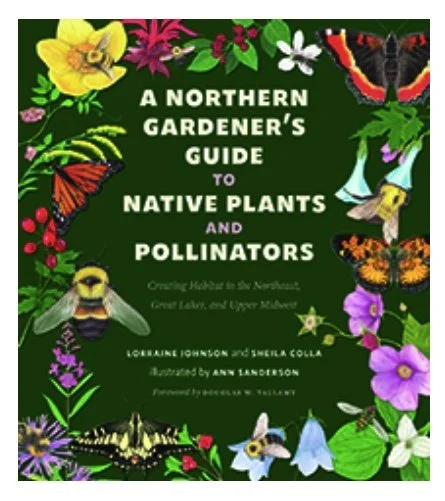
"Private landowners hold enormous conservation potential because there are so many of them. In the United States, 135 million acres are now in residential landscapes. The good news is that hundreds of millions of people live in, and thus manage, those landscapes. With a little education, all of us can come to realize that sustainable earth stewardship is not something we can ignore or practice only if we feel like it. It is essential" (viii).
Get that? You, too, could be a landscape manager and make your environment part of a homegrown national park, even if you only have a couple of pots or windowboxes.
“The practice of flooding our yards and gardens with nonindigenous plants that cannot interact with our natural landscapes is unsustainable.” (141) Summers and Brittenham
Sustainable is a key word here. Once we begin to delve into the wonders of the food web and realize how much of its foundation has been threatened and outright removed by our landscape “malpractices,” we can be even more inspired to make changes. There is joy to be found in participating in the restoration of healthy relationships between the flora and fauna of our areas.
Interact is another key word. Everything we plug into the ground, whether it is a plant, a shrub, or a tree, begins to affect the surrounding environment. We may be aware of “beautiful baddies” such as purple loosestrife and Callery pear trees. But we mayb be less clear on how other common landscape plants such as forsythia or English ivy have low ecological value or can be outright destructive compared with indigenous alternatives such as spicebush or creeping phlox. Even seemingly “neutral” non-native plantings have an opportunity cost: there could be something much more beneficial living on the real estate they occupy. And, while people have become interested in planting for pollinators, the implications for the broader food web are even larger.
As Tallamy points out in his book, How Can I Help?: Saving Nature with Your Yard, “caterpillars transfer more energy from plants to other animals than any other plant eater” (83). Think about that for a minute. When was the last time you saw any caterpillars in your yard? Caterpillars are incredibly important to habitats, and habitats are incredibly important to caterpillars. Tallamy explains: “everywhere you go, just 14 percent of our native plants support 90 percent of the caterpillars that drive local food webs” (96). When turf grass dominates, fallen leaves are swept away, and gardens mainly favor food for humans, that’s a recipe for depletion and disaster.
People have embraced milkweed plants, understanding their importance to monarchs. But countless other insects also desperately need native plants to survive. Lorraine Johnson and Sheila Colla note that “more than 90 percent of herbivorous insects (those that directly consume plants for sustenance) are specialists on native plants. By growing habitat gardens full of native plants, you’ll be supporting these crucial, co-evolved relationships, such as the one between monarchs and milkweeds” (A Northern Gardener’s Guide to Native Plants and Pollinators, 21).
When it comes to choosing trees, this is an especially important consideration. Summers and Brittenham point out the long-term effects of our choices:
“Along with other insect larvae, the butterfly and moth caterpillars feeding on indigenous trees are themselves food for the chicks of over 96 percent of bird species. Before choosing a new tree, consider how many life forms, in addition to humans, will be able to use it over the next one hundred years.” (69)
Yep, the next hundred years. Just imagine all of the good you can do!
There are other ways that health–that of other life-forms or our own—can be impacted by the plants in our locales. For instance, native plants don’t simply provide food for the insects they’ve co-evolved with, but also act as medicine: "bumblebees infected with a common intestinal parasite self-medicate with plant chemicals found naturally in nectar and pollen. When . . . infected . . . they seek out white turtlehead flowers containing the highest concentrations of these chemicals" (Northerner's Guide, 15). Conversely, non-natives can be reservoirs for unwelcome critters: a study in Connecticut led to a surprising discovery that “Japanese barberry has been found to harbor abnormally high levels of lyme-infected ticks” (Summers and Brittenham, 98).
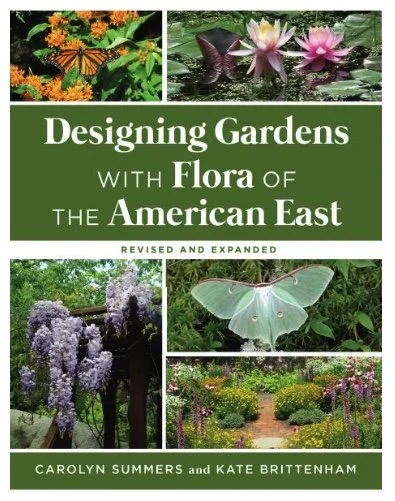
If you’d like to discover more such fascinating facts, Designing Gardens with Flora of the American East and A Northern Gardener’s Guide to Native Plants and Pollinators are both excellent, up-to-date places to start. Like reference guides and coffee table books rolled into one, both are lushly illustrated with photos and/or botanical paintings. They offer garden plans as well as extensive resources and appendices.
The two books differ a bit in their focus, however. A Northern Gardener’s Guide is just that: it is organized primarily around individual plant species. It helps acquaint you with their seasonal patterns and needs; the specific insects they support; and their contribution to the garden. There are simplified planting suggestions included at the end, for things like rain gardens, balcony gardens, a “public patch,” and high-density residential plots.
Because of the way it’s laid out, even just browsing this book will help you get to know and appreciate how many gorgeous native plants are available in this area. I took it with me when I went to a native plant sale in October, to help me make my selections. It could even help you recognize more of the wildflowers and plants you encounter in local nature preserves and forests.
That’s a less-recognized gift native plants can give us: a stronger feeling of connection to history and place. Henry David Thoreau acknowledged it in his considerable botanical collections from around Concord and various parts of New England. As Ray Angelo remarks in the book, Thoreau’s Wildflowers, “his efforts arose from a desire to distinguish more clearly the textures with which Nature clothed his native town, and his New England, since he felt himself to be part of the same fabric: ‘I am interested in each contemporary plant in my vicinity, and have attained to a certain acquaintance with the larger ones. They are cohabitants with me of this part of the planet, and they bear familiar names’” (xliii).
Sadly, many of Thoreau’s familiars have vanished. Researchers comparing today’s native plant populations found that “many of the species observed by the Walden author in the 1850s were either no longer present in Concord or very hard to find. They concluded that 27 percent of the species recorded by Thoreau and other botanists were no longer present in Concord at all, and a further 36 percent of formerly common species were now rare” (Scientists use Thoreau's journal notes to track climate change | Grist).
Designing Gardens was authored by a mother-daughter team of gardening expert and landscape designer. It contains similar information about individual plants, their care, and characteristics. The authors apply this information in more depth to strategies for garden layout, and offer many sample plans. They also describe the science of ecosystem damages done by nonindigenous plants when their growth is unchecked. For example, they explain the propensity of English Ivy for "killing trees from the bottom up, leaving them looking somewhat like giant stalks of broccoli" (113). I especially like their helpful advice about "appropriate alternatives"—plants to replace problematic but popular landscaping choices such as butterfly bush, forsythia, and burning bush. Whether you are setting out to plan and plant a native garden, or simply dreaming of gardens during a dark, northeastern winter, these two books have much to offer.
I hope you’ll dream up some new ways to include native plants in your life this summer. Remember, even your windowbox could be a boon to pollinators! You can start small, using this list of container-friendly plants—Keystone Plants - Homegrown National Park - Native Plants—or go big by converting parts of your yard, garden or street strip. The birds and the bees will thank you.
Books and Resources:
Lorraine Johnson and Sheila Colla, A Northern Gardener’s Guide to Native Plants and Pollinators: Creating Habitat in the Northeast, Great Lakes, and Upper Midwest
Carolyn Summers and Kate Brittenham, Designing Gardens with the Flora of the American East
Nancy Lawson’s books, The Humane Gardener and Wildscape, and her website: Humane Gardener
Doug Tallamy’s many books and his Homegrown National Park project: The website is a chock full of resources! They also offer kits to help you get started.
Xerces Society for Invertebrate Conservation: This organization offers a variety of resources, and focuses on “pollinator conservation, endangered species conservation, and reducing pesticide use and impacts.”
Groups you can follow on Facebook:
Native Plants of the Northeast
Capital District Pollinator Allies
Wild Ones Capital Region NY
Home Earth Alliance (and on Instagram @homeearthalliance)
ECOS: the Environmental Clearinghouse ( also Instagram @ecosny2)
Local organizations and people who can help you learn more and access plants:
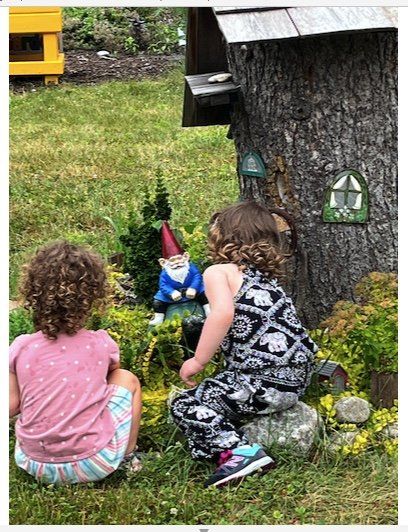
Richard Daley at Sunray Sustainability: Richard contributes to the Coop Scoop and leads the Kids’ Gardening and Nature Club at Honest Weight. He has collaborated on many community-based projects related to green space, including gardens, insect and wildlife habitat, and sustainable land use initiatives. He and the Home Earth Alliance collaborated to create the Wilbur Woods native pollinator garden.
Home Earth Alliance: This dynamic, recently-established nonprofit is working hard to provide resources, education, and plants to our area. Visit their 5,000 square foot Ecological Landscape Exhibit at the Capital Region Flower and Garden Expo March 27-29 at Hudson Valley Community College for information and kids’ activities. Their IMAGINE Native Plant Farm in Glenmont, NY started in 2024, and should be high on your list for a visit when it reopens in April. They are committed to “Wild seeds ethically collected from and native plants lovingly grown for this ecoregion.”
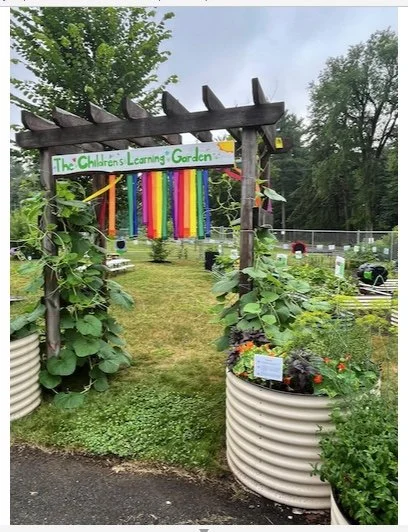
Cornell Cooperative Extension: Very cool events and offerings, including native plant sales, and gardening activities for children can be found at this wonderful center in Schenectady’s Central Park.
ECOS: the Environmental Clearinghouse: This local organization has been promoting environmental stewardship for over fifty years. They offer guided walks, trail cleanups, and garden tours and workdays, as well as educational programming, including their Healthy Yards campaign. They are maintaining three model pollinator gardens in high visibility areas, including the Niskayuna high school and the town pool. They have partnered with Jessecology.com to create plans for the ECOS Model Pollinator garden kit for shade or sun, as well as a Butterfly Garden Starter kit.
Jessecology.com offers residential landscaping and has a native wildflower farm nursery.
Capital Region Wild Ones offers workshops, webinars, and events like their spring plant sale and fall annual native plant seed exchange, as well as great lists of local plant and tree nurseries, landscapers, and designers.
Wild Ones also has a wonderfully browsable reading list, complete with titles for kids, and book reviews, linked to bookshop.org and a discount.
View all the Coop Scoop Blog posts here.