
Co-op 101: Local Dollars and Sense
by Ruth Ann Smalley
We hear “buy local” reiterated so often that by now we have a general sense of its importance. The American Independent Business Alliance (AMIBA) puts it simply: “spending locally creates more local wealth and jobs,” and “even modest changes in purchasing habits can produce meaningful impacts.”
But because the retail landscape is always shifting and changing, it’s worthwhile to periodically take a fresh look at the actual impacts. The phrase “Local Multiplier Effect” refers to the fact that a single dollar spent at a locally-owned business circulates powerfully within your community. While it varies by business, “your dollars recirculate through your local economy 2-4 times more than money spent at a non-local company”.
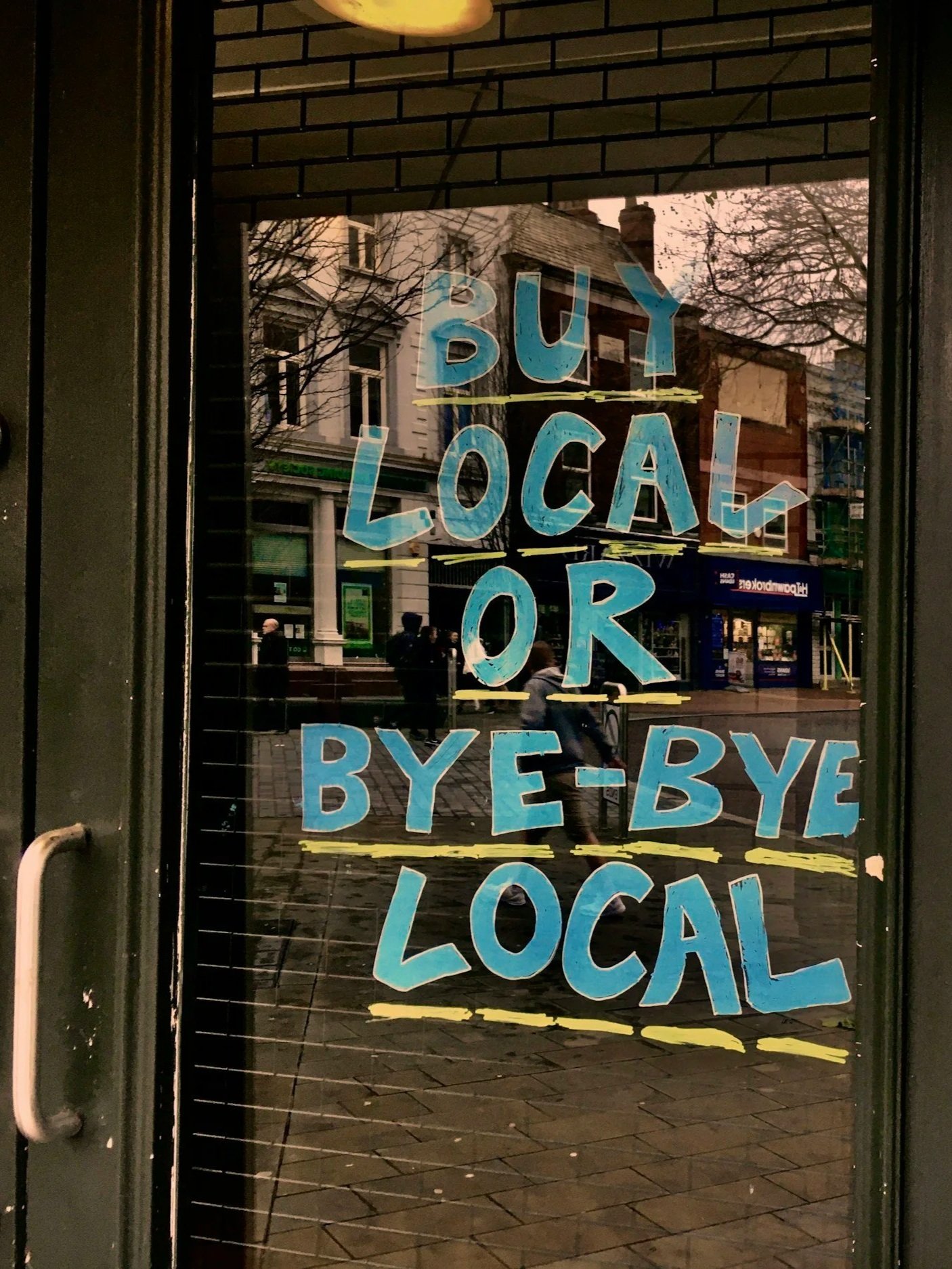
This is due to what the Civic Economics organization calls the “four components of local advantage: labor, profit, procurement, and charity.” In other words, local businesses use your dollar to pay employees and to reinvest in the community through their own purchases, including locally-sourced inventory and support for local non-profits. A recirculation rate of double to quadruple is nothing to sniff at, and for a food co-operative like ours, with a deep network of local producers, that rate is probably even higher.
Civic Economics and the American Booksellers Association teamed up over twenty years ago to begin tracking and analyzing the market effects of a certain gigantic online retailer. Their latest findings in a 2022 report entitled “Unfulfilled” are informative. They report that in the case of independent bookstores, “approximately 29% of all revenue […] immediately recirculates in the local economy.” This amounts to “a massive 405% local impact advantage over Amazon.”
And there’s another element we don’t hear as much about—infrastructure impacts. “Unfulfilled” notes that increasing sales of chain and online retail goods are changing the built environment: “ongoing displacement of retail activity from traditional commercial spaces to outlying industrial parks is an emerging crisis for American cities and towns.”
The numbers here are pretty eye-popping: “Amazon displaced 136,000 shops occupying 1.1 billion square feet of traditional commercial space with its 2021 retail sales. Moreover, the replacement of 1.7 million retail employees with only half as many jobs in fulfillment means there are ever fewer jobs associated with retail.” The authors warn that “American cities have been slow to grasp the challenge posed by this movement.”
Our online and chain purchases are not just happening “out there, somewhere in the digital realm, of no concern to me.” The problem of non-local ownership is very local because it affects more than employment rates—it involves issues around land development, transport, and taxation. Add this to your calculation the next time you make a choice about where to purchase something: “These [industrial park] facilities require entirely new, invariably publicly funded infrastructure in order to move workers and an endless stream of trucks and vans to and from those locations. And even as local governments struggle to develop that infrastructure, the legacy investment in existing commercial districts goes underutilized and loses the tax basis that supported it.”
The ripple effect is huge. When you buy local, you are making a positive difference.
For the full “Unfulfilled” report, see Unfulfilled: Amazon and The American Retail Landscape Report (PDF).
View all the Coop Scoop Blog posts here.