
Nutritional Nuggets: Mighty MicroGreens
By Pat Ellis
The use of young greens, precursors to modern microgreens, can be found in ancient Egyptian and Chinese cultures. The modern concept of using these young, edible vegetable and herb seedlings as culinary ingredients began in the 1980s in California, where chefs such as Alice Waters incorporated them as garnishes in her upscale restaurant creations. They continued to gain a broader place in the food industry through the 1990s until the present day, when we have gained a fuller understanding of their value in terms of flavor and nutrition as well as aesthetic appeal.
Microgreens are generally more nutrient-dense than their smaller cousins, sprouts, containing higher levels of vitamins, minerals, and antioxidants. Unlike sprouts, microgreens are grown in soil and sunlight for 7-21 days, depending on the variety. They can be grown from many different types of seeds. The most popular varieties are produced from the plant family Brassicaceae, which includes broccoli, cauliflower, cabbage, arugula, kale, and radishes. Pea Shoots (Fabaceae) and Sunflowers (Asteraceae) are also widely consumed varieties. An additional benefit of microgreens is that they can be bought whole, allowing them to be kept alive until they are ready to be consumed.
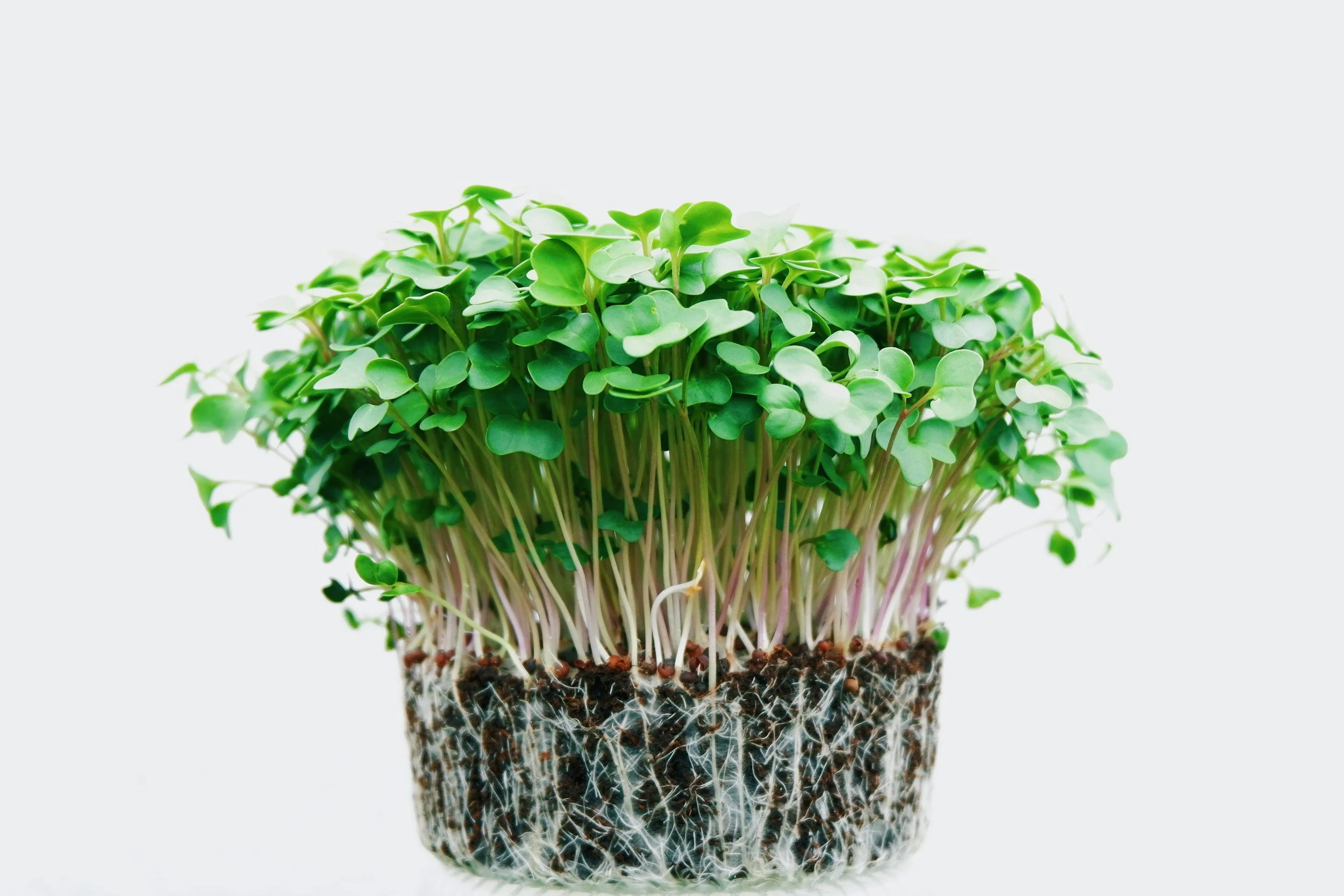
While the initial appeal focused on the richness of flavor and attractive appearance, we have now discovered the nutritional punch these mighty minis bring to any dish. There have been more than 3,000 scientific papers published in the last eight years attesting to their nutritional prowess. Studies over the last decade have uncovered that these small, generally 1-3 inch tall plants are packed with vitamins, minerals, and antioxidants that are often at higher levels than the same quantity of mature greens. That same study showed that while levels varied, the concentration of Vitamins C, A, K, and E; antioxidants such as anthocyanins, quercetin, beta carotene; and powerful cancer-fighting glucosinolates can be up to 40 times higher than those recorded for more mature leaves.
One study compared the mineral profile between microgreens and mature lettuces and found the microgreens were higher in calcium, magnesium, iron, and zinc. The same study indicated that they were also lower in the nitrates that can have a detrimental effect on our bodies.
What does all this mean for our continuing health? Let’s look at six benefits attributed to microgreens by the Cleveland Clinic:
Helps in the management of Type 2 Diabetes by improving insulin resistance.
Improves Brain Function: The polyphenols found in microgreens may improve how well you think and reason, and even prevent or delay the beginning of neurodegenerative diseases.
Helps in Cancer Fight: The Brassicaceae family, which includes broccoli and cabbage, contains “sulforaphane,” an antioxidant whose many benefits include cancer prevention.
Several studies have confirmed that broccoli microgreens can have as much as 100 times the amount of sulforaphane as the mature vegetable.
Protects Vision: Lutein, an antioxidant found in spinach, broccoli, dandelion, and cress microgreens, is very beneficial for eye health in older adults.
Reduces Risk of Anemia: Many microgreens are a rich source of iron.
This list is not all-inclusive, but does give a picture of how powerful microgreens are as an addition to a healthy diet. HWFC carries some varieties of microgreens ready for your consumption, and if the variety you want is not there, consider growing your own. It’s a great way to bring the garden indoors in the winter months! You could have a harvest in as little as seven days.
Whichever option suits you, remember that for microgreens: Great things do come in small packages.
Enjoy!
View all the Coop Scoop Blog posts here.