
What Can You Save With a Sponge?: Actions in Honor of Earth Day
by Ruth Ann Smalley
Did you hear about the big nurdle spill in January? No, a nurdle is not a creature from a Dr. Seuss story. If you didn’t see the news, and don’t know what a nurdle is, let’s start there.
Nurdle is the name for the tiny—generally rice-sized—pellets that form the feedstock for many plastic products. In the January occurrence, thousands of pounds of these white polystyrene pellets spilled along the Kalamazoo River in Michigan when the truck carrying them crashed.
While most of us probably haven’t heard about it, such spills are considered “not uncommon.” In fact, while the truck accident was an acute case, the problem of nurdles being released into the environment classifies as chronic. Garrett Ellison reports that ”A 2025 study published in Environmental Monitoring and Assessment analyzed 1,089 coastal surveys from 39 countries and nearly 59,000 pieces of plastic collected by volunteers. Pre-production nurdle pellets were the most common type recorded. White pellets dominated the dataset.” (Michigan ‘nurdle’ spill underscores a chronic Great Lakes threat - mlive.com). Meanwhile, in Texas, the Dow petrochemical company is requesting permission to discharge even more plastic pellets and other plastic manufacturing byproducts into the water on purpose ( Dow Asks Texas to Legalize Plastic Pollution From Its Seadrift Complex - Inside Climate News).
“In the water,” Ellison notes, “nurdles can act like a sponge — absorbing contaminants in the water column and potentially serving as a vector for chemical exposure if eaten by game fish or birds.”
This means nurdles are yet another way that plastic is infiltrating the environment, requiring our attention on personal and policy levels. We’re just beginning to learn about both the amount of and the multiple pathways for the circulation of plastic debris (with its 16,000+ possible additive chemicals). It’s seriously bad, depressing news, but only by facing it do we have any chance of improving the situation. A convenient place to learn more is at Environmental Health News, which collects a broad range of current pollution coverage and publishes a weekly newsletter.
I’d suggest rationing yourself on this kind of news, though. Because the plastic problem impacts so many aspects of our lives, too much information at once is overwhelming. It's easy to feel like nothing we can do personally could compare to the scale of the problem. And this would be true. But it is also true that our efforts—in our own households and beyond—do matter. And when you take those smaller personal steps, it paves the way to bigger pushes for policy change.
On the individual level, action takes time, attention, and breaking things down into small steps. Focusing on a particular area of your life can help. For instance, over the years, my family has been working to eliminate plastic for kitchen use and storage. This is a two-pronged approach: 1) finding glass containers and other alternatives, and 2) trying to limit the amount of plastic packaging that comes into the house through grocery purchases. Yes, it's a slow process, but gradually replacing plastic cutting boards, mixing bowls, and other utensils, and planning for more bulk purchases is definitely a form of progress.
If you are just starting out in furnishing your own kitchen, you can avoid a lot of plastic pitfalls simply by making very intentional purchases (and hitting yard sales and thrift stores, and joining a Buy Nothing group). But when it comes to replacing disposable items, quick, easy improvements are possible, even in your long-established kitchen. Which brings me back to the image of the nurdles entering the water and acting like sponges.
A lot of us don’t have the hydrological cycle in mind when we’re grabbing cleaning products at the store. But the tools we use around our sinks can make a difference in whether or not we add to the watershed’s plastic burden. Ironically, our cleaning tools can be pouring trash into the environment.
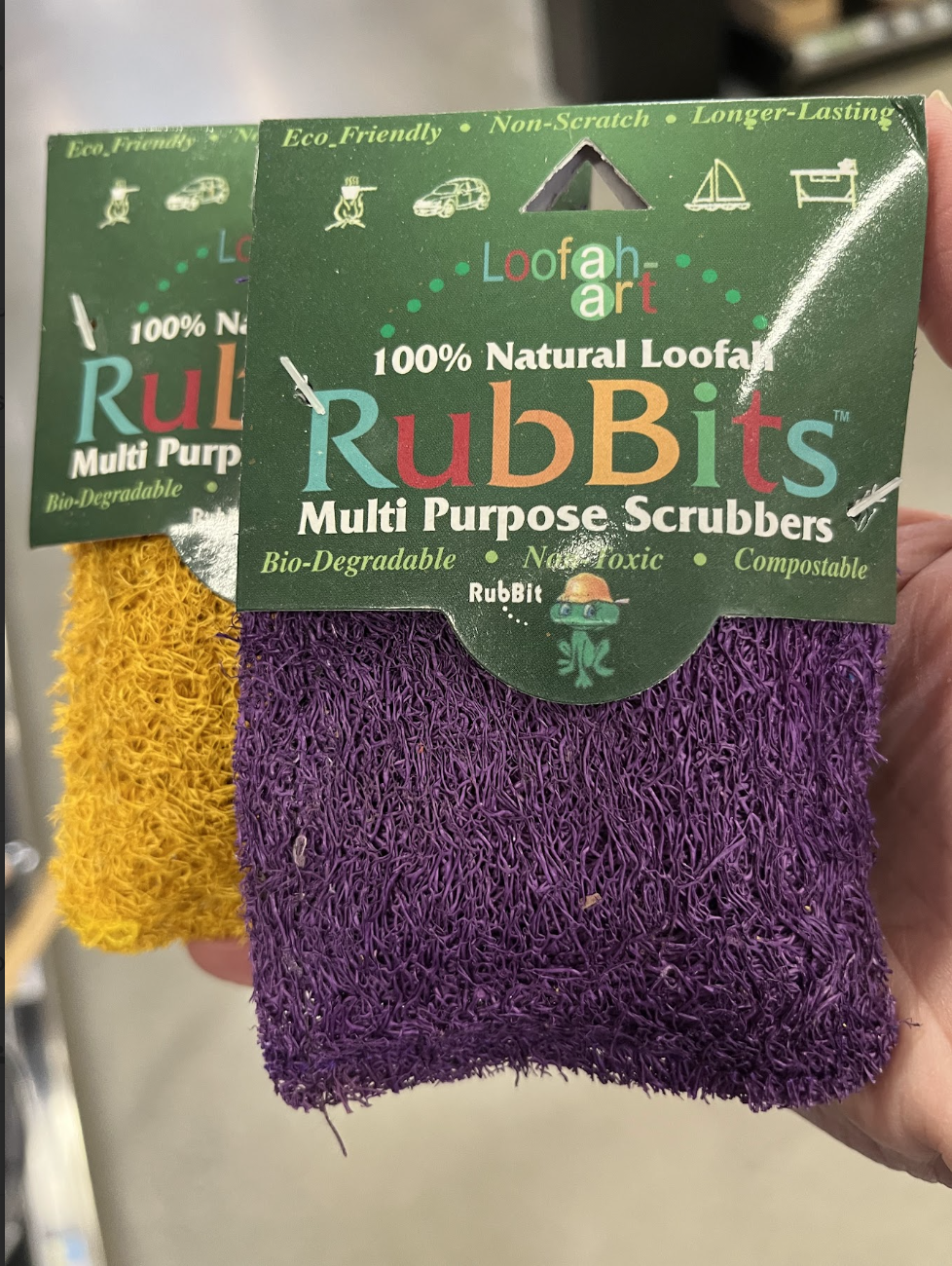
Plastic scrubbing brushes, sponges, and scouring pads—subjected to water and abrasive action—are going to shed yet more particles that go right down the drain. Seems small right? But think of all the hundreds of thousands of household drains, day in and day out. It's a lot.
Yes, it probably pales in comparison to the damage being done by the petrochemical industry. But here’s the rub: why should we let them off the hook in two ways? They’re offloading it into the environment AND then getting us to pay them for products that do it some more.
The authors of Beyond the food on your plate: Investigating sources of microplastic contamination in home kitchens - ScienceDirect describe how it happens:
“For example, dish sponges can be manufactured from nylon, polyester (PES), PE, and cellulose [65]. In a study Luo et al. [66], examined the shedding of microplastics from sponges by mimicking the cleaning process using a soft and hard layered sponge on a glass surface to simulate smooth surfaces and knives and forks to simulate sharpen edges. The study revealed that nylon PA-6 particles were shed from the soft layer of the sponge, while PET particles were released from the hard side.”
Other factors: harsh cleansers or detergents may exacerbate particle shedding, and the older the sponge, the greater the breakdown. And if we swap in a washcloth or dishcloth, we aren’t completely avoiding the problem: “though no studies have been performed on microfiber cloths and the potential release of microplastic fibers due to the friction when cleaning, most microfiber cloths are composed of synthetic materials such as PES or PA, potentially shedding tiny plastic fibers [64,67,68].
So, if you’ve found yourself exclaiming “make it stop!” when reading the news, well, the good news is that in this case, you can. Honest Weight’s housewares department offers you lots of choices for natural bristle cleaning brushes, and even plant-based sponges, boasting scouring power from walnuts to loofahs.
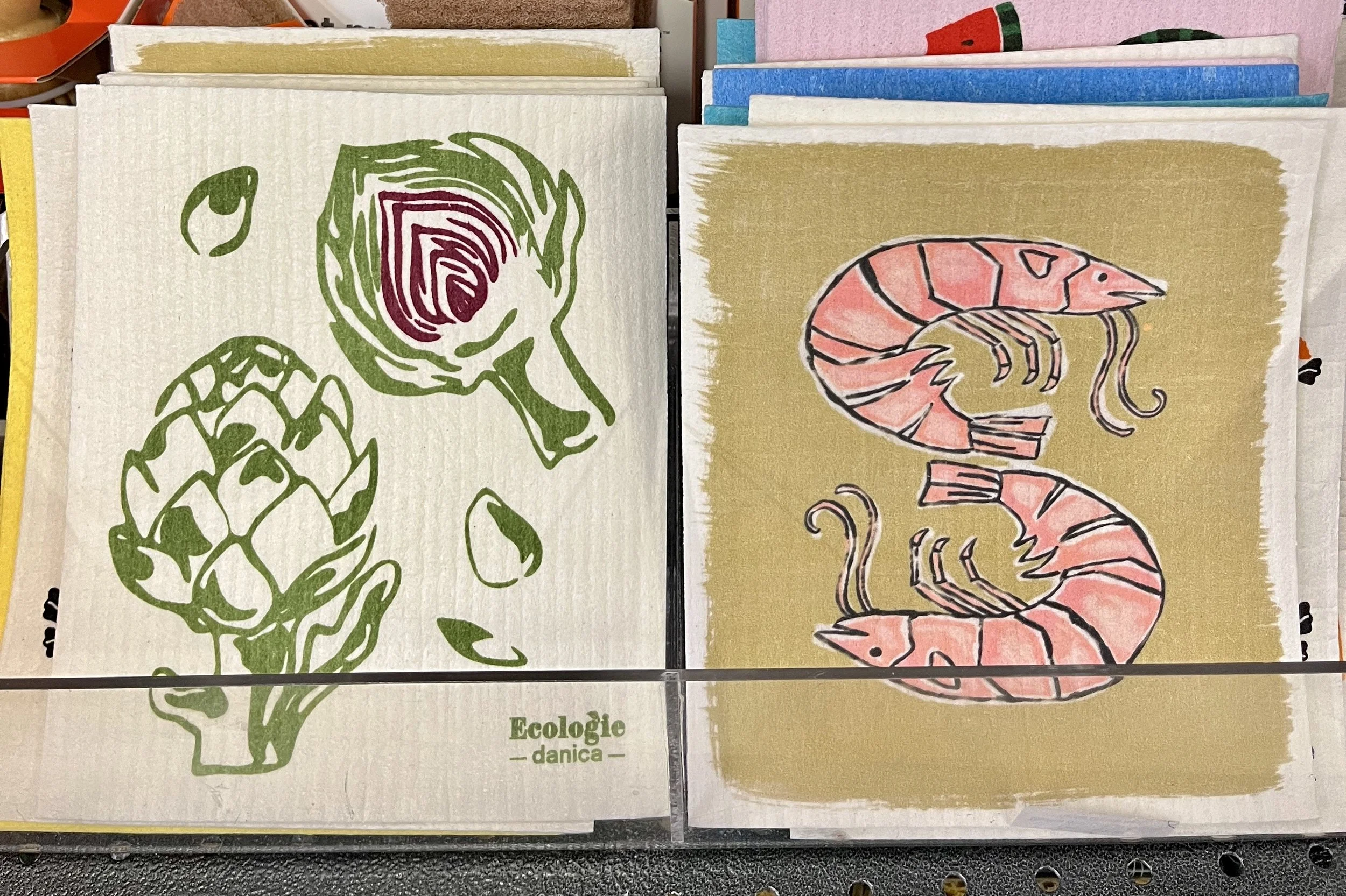
I’d also like to highlight a nice alternative to sponges, microfiber cloth, and paper towels: the Swedish dishcloth. Years ago, after learning how sponges could serve as reservoirs for all kinds of icky stuff, I tried putting them into faster rotation through the dishwasher, as well as reducing the types of cleaning I used them for. But I had trouble giving them up. And I was skeptical of the adorably-designed but seemingly-pricey Ecologie Swedish dishcloths made by Danica.
I’ve been kitchen-testing them for a while now, however, and they seem like a good alternative. They are made from plant fibers and manufactured in Sweden. The cellulose used is largely made from waste cotton fibers, so hey: recycled!
They’re thin enough that they dry rapidly, discouraging the growth of unwanted icky stuff that can occur inside thick sponges. They survive the washing-machine and dishwasher very well. The website claims they will last at least nine months and two hundred wash cycles. That seems true from my experience.
And finally, when you’re done with them, you can home compost them.
So, what can you save with a sponge? Starting with this and other plant-based options, you can save trees by replacing single-use paper towels, and save watersheds from an additional stream of pollutants. This and many other small steps can help you avoid creating more micro- and nanoplastic pollution. For more information and tips about getting plastic out of your kitchen, specifically, see: Your kitchen is full of microplastics. Here's how to eat less of them.
Once you’ve experienced feeling empowered by these smaller household victories, you can scale up to working against nurdles and other villains! The Plastic Pollution Coalition offers ways to take policy-related actions, including this petition page: Petitions | Plastic Pollution Coalition. Beyond Plastics, our locally-founded, nationally-active organization, is also a great place to get involved. Check out the resources at https://www.beyondplastics.org/, as well as a new book, The Problem with Plastics, by our local expert, Judith Enck.
View all the Coop Scoop Blog posts here.