
Minimal Assembly Required: Setting Up Your Home Hyggekrog
By Ruth Ann Smalley
“The greatest threat to capitalism is everyone feeling happy enough that they no longer need to buy anything to make them so. Which means that staying at home and finding comfort and joy in what you already have is an act of rebellion.” Meik Wiking, My Hygge Home
Hygge, pronounced hoo-guh. If you are not Scandinavian yourself, you may have stumbled across this word several years ago. Not too long after Meik Wiking’s The Little Book of Hygge: The Danish Way to Live Well made a splash in this country, a stream of related books and articles followed, and the marketplace tried to capture the term. Hygge was quickly deployed as a “brand,” meant as a label for trendy accessories for a certain kind of experience. An experience that many in the U.S. seemed hungry for when Wiking’s book came out in the fall of 2016. It is no longer the latest fad, but the turbulence of our times might suggest it's a good moment for a reprise.
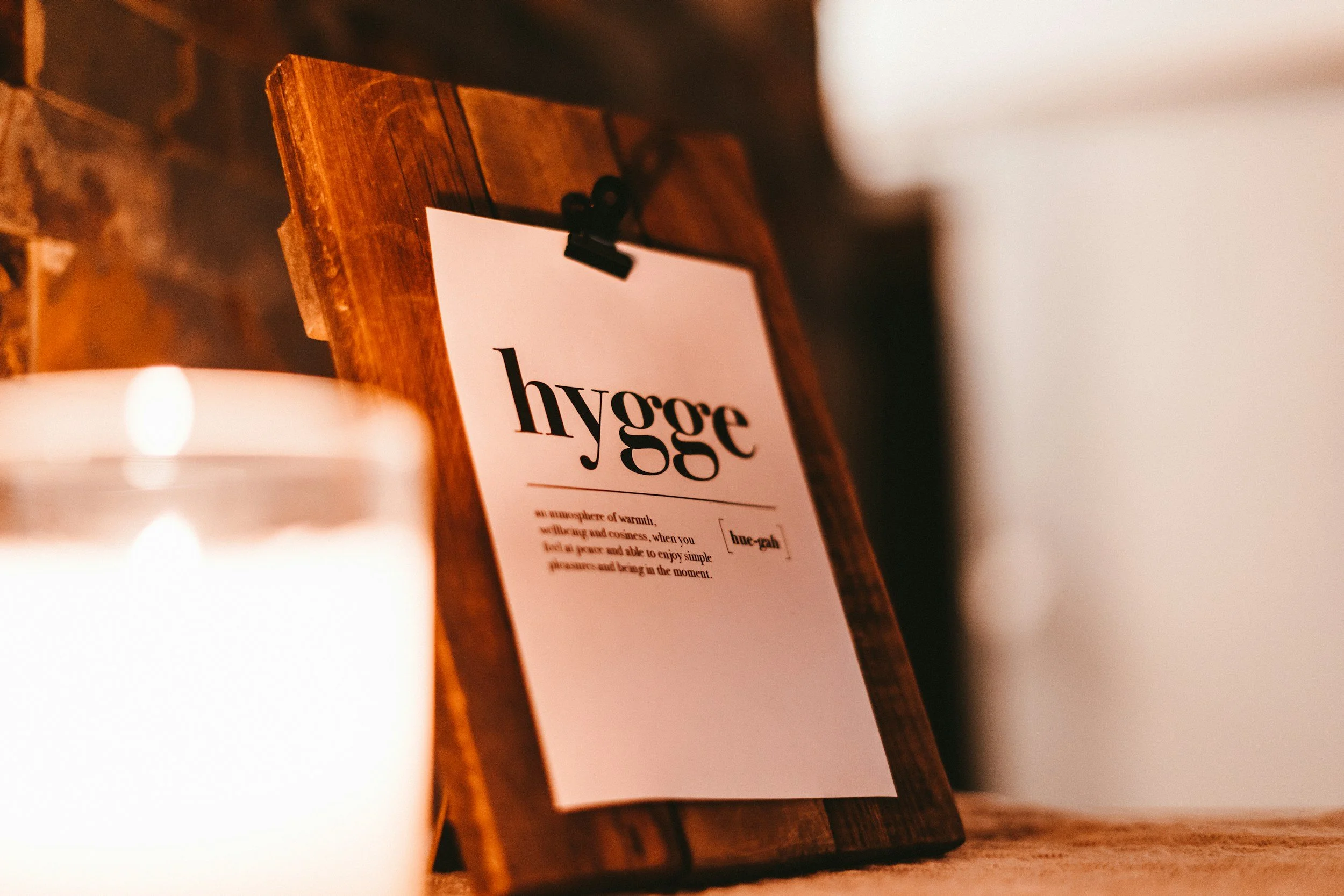
If you type in hygge as a search term—and I suggest that you don’t—you will be awash in images of wooly socks, fuzzy blankets, cushy couches, pottery mugs, and candles, so many candles. All staged in otherwise minimalist rooms full of pale neutral colors. In his follow-up book in 2022, called My Hygge Home: How to Make Home Your Happy Place, Wiking reflects on this problem of “hygge washing.” He notes that “when hygge went beyond Denmark, a few things got lost in translation.” He recalls a question from an American journalist that exemplifies this: “If I want to get hygge, what’s the first thing I should buy?” As Wiking points out throughout his books, hygge is not something you buy, but more of an atmosphere that you create.
A concept of coziness from a society living in colder, darker northern climes, hygge is a multi-layered value system and the word works as both a noun and a verb. It refers to calm, comfort, and conviviality: a warm, friendly ambience and mood. As a practice, it can encompass anything from hot beverages and books enjoyed in solitude to simple, shared food with a gathering of friends. And while in spirit it can take place in public places or outdoors, Wiking centers it in our most fundamental dwellings, as a way to make our residences act as homes rather than just housing. According to Wiking, hygge is not about what we have but how we relate to our belongings, and that includes frugality: “It is about repairing our clothes rather than buying new ones. It is about using the food we have in our fridge and not letting it go to waste.”
After reading both Wiking’s hygge books, I’d boil down the recipe for designing your hygge space to these ingredients (that are both literal and metaphorical): light in dark times, warmth to stave off chill, and cushioning as a buffer against harsh elements.
Winter is, of course, the perfect time for hygge. If you can make your hygge arrangements while adding friends and family into the mix, all the better. Merely recognizing the importance of these three simple aspects will help you assemble a little home island, which might also spur you to expand hygge into more parts of your life.
You can start with hyggekrog: a cozy nook. I love how Wiking illustrates this term with a simple line drawing of a wingback chair. You may already have a suitable spot, and may simply wish to spruce it up a bit. If so, yay. But it may take a little more planning if you are newly moved into a space, perhaps without a lot of furnishings; are frazzled and super-busy; or overwhelmed with taking care of other people and lacking your own space of refuge.

Years ago, when I was sandwiched between the needs of children and the demands of eldercare, I took a winter wellness workshop. The first suggestion was to create an area to retreat to in the home. For me, that meant decluttering a small corner of the bedroom. I found it made an outsized difference. Having learned about hygge and no longer in caregiving mode, I’ve taken more territory: I now also have a couch corner and a bookshelf-lined corner (yes, I find corners cozy, but for some, windows are more appealing. Mine are too drafty).
You probably already have most of what you need to set up a hyggekrog, or could supplement from a thrift shop or yard sale. It’s just a matter of pulling it together into a good spot. Light, either natural or from a lamp or candle; a blanket or throw (or maybe a robe, hot water bottle or heating pad, and/or slippers); and cushy, supportive seating. That’s it. Having some houseplants in sight will amp up the effect, as will things like natural fiber area rugs to create a feeling of a comfort zone.
It also helps to have a small side table to put your books, cool rocks, craft supplies, and steaming hot mugs on. Oh, and snacks. Wiking’s books offer some fun suggestions for hygge food, and lots of other tips for the hygge life, but I’d just like to share a couple of my favorite recipes for easy finger food for your hyggekrog.
Easy-Chickpeasy Oat crackers
Preheat oven to 360 degrees.
Rinse and drain one 400 g can of chickpeas, and blend in food processor until it starts to form a smooth ball.
Add 1 cup of rolled oats and blend thoroughly together.
Mix in 2 cloves of garlic and 1 Tbsp lemon juice, add salt at your preference.
Slowly add ¼ cup olive oil, while blitzing the blender, until a well-mixed ball forms.
Press dough onto parchment-lined baking sheet and begin flattening it by hand.
Spread the dough evenly with a rolling pin, using another sheet of parchment on top. Roll to about ¼ inch thick, and then cut into cracker shapes.
Now, if you wish, you can get creative, adding pepitas, sunflower seeds, poppy seeds, additional salt or other spices, pressing lightly into the tops of the crackers.
Bake until golden, about 40-50 minutes, and then allow to cool.
Lightly Sweet-and-Salty Roasted Nuts
Preheat oven to 325 degrees.
Combine 1 cup raw walnuts or pecans, 1 cup almonds or hazelnuts, and ¾ cup of raw pepitas on a baking tray, lined with parchment.
Pour 1 Tbsp olive oil and 1 Tbsp maple syrup (or more, to taste) over nuts and stir to distribute thoroughly. Add salt to taste, and if you wish, a little cayenne or rosemary for additional flavor.
Stir after 10 minutes, and then every 5 minutes until nuts are golden brown, around 25 minutes. Let cool.
View all the Coop Scoop Blog posts here.