
Gifts You Aren’t Allowed to Buy
by Ruth Ann Smalley
Have you heard of “Buy Nothing” groups? Maybe even belong to one yourself? These groups are based on the desire to promote stronger community connections through a “gift economy.” No selling or bartering allowed; people may ask for/offer items, food, help, information, and other free services. Here’s how they describe it on the Buy Nothing website:
We exist to renew the relational fabric of communities through abundance, trust, and genuine connection — by enabling neighbours and communities to give, receive, share, and express gratitude in a hyper-local gift economy where real wealth is found in human connection. In fewer words: Our mission is to change the way the world consumes. Check them out here.
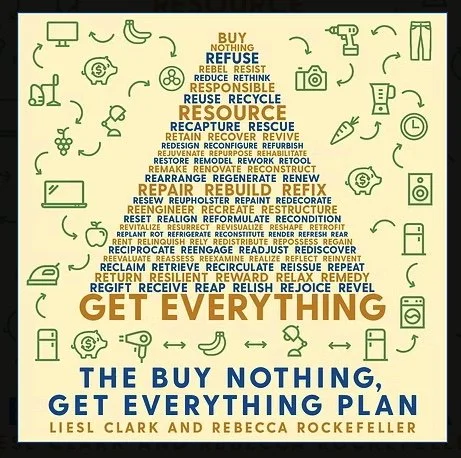
The Buy Nothing Project has been on Facebook since 2013. Co-founders Rebecca Rockefeller and Leisl Clark have followed up with a 2020 book called the Buy Nothing, Get Everything Plan, as well as an app for people who prefer to participate outside of Facebook.
With 13 million members in 245,000 communities worldwide, Buy Nothing appears to be meeting a real need. There are at least two groups on Facebook serving Albany, one with 6,000 members, and the second with 1,000. People go there to ask for advice about local services such as medical providers, home repair, and childcare; seek help with transportation to events or even to urgent care; or search for everything from prom clothes on loan, to art supplies and materials to upcycle. You can find offers of baby clothes and diapers, plants, furniture, books, extra meals, even an opened three-pound bag of Jolly Ranchers! It can be a place of surprises and of sadness, as people post from both their abundance and their desperate straits.
Yes, over the years, issues seem to have arisen around socioeconomic and other differences in Buy Nothing groups within some locales. Disagreements have erupted between users and moderators. As with most any large group of people interacting on social media, you will find interpersonal drama, kvetching, and complaints about interactions. With thousands of members, not everyone is going to be up on, or observant of their guidelines. But the organization offers plenty of group resources (including a self-paced Buy Nothing Academy course online), and their basic principles are solid. I especially like these two:
“We view all gifts as equal; the human connection is the value.
We believe every community has the same wealth of generosity and abundance.”
Though I’ve been a member for a couple of years, it wasn’t until I dug into the Buy Nothing website that I discovered that their mission to “change the way the world consumes” has a direct connection to plastic waste. The co-founders have interesting backstories. Liesl brought her experiences working as a filmmaker looking at historic cultures with vastly different relationships to their materials of daily life. Rebecca brought her experience as a single mother who had needed government assistance. But here’s where plastic pollution comes in: back in 2010, they and their children began finding plastic detritus washed up on their local beach. Acting as citizen scientists to collect, catalogue, and analyze this waste became a homeschooling project for a group of families. They even turned it into art projects to call attention to the problem. The sheer quantity of plastic items they found coming from everyone’s household waste stream fueled their drive to promote changes in personal consumption. You can find out more and watch their short film about their Plastic Is Forever Project here.
So, in addition to being about gifts, connections, and community, Buy Nothing is part of a larger, much-needed Zero Waste movement. Networks of gift-givers like this not only encourage people to think differently about what and how they consume, they can and do act to divert waste from landfills.
If you are looking for more ways to be involved specifically with zero-waste efforts, check out the website of Zero Waste Capital District. As this view from their webpage shows, their resources and tips for reducing waste could come in very handy as you plan or participate in events during the holiday season. Parties and presents too often come with a high burden of “disposables.” With a little forethought, you could be giving a gift to our environment by avoiding common pitfalls.

Changing the way the world consumes may sound like an enormous goal. But we can each “be the change we wish to see” simply by taking small, intentional steps of care, attention, and sharing. The path is wide open.
View all the Coop Scoop Blog posts here.